
Are you looking to grow your business without falling deeper into debt? Working capital management is crucial for small business owners, yet it can be a tricky concept to grasp. Let me explain in layman’s terms.
What is Working Capital?
Working capital is the difference between your accounts receivable (money your customers owe you) and accounts payable (what you owe your suppliers). The gap between these two figures is the amount you need for working capital in your business.
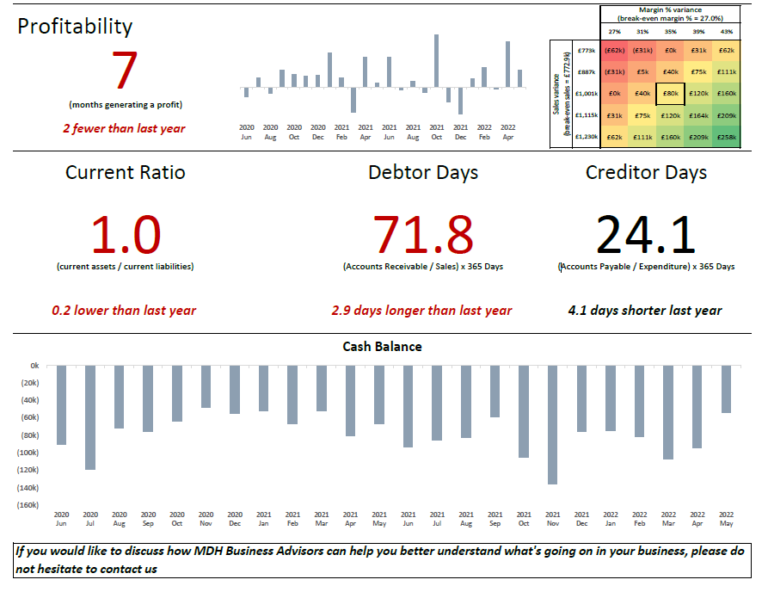
Many clients get overwhelmed by the numbers, so we convert this into “days.” By calculating your debtor days (how long it takes customers to pay you) and creditor days (how long you take to pay suppliers), you can understand the difference and how it impacts your cash flow.
Managing Working Capital
The tricky part is that debtor days constantly fluctuate throughout the year – it’s not because you’re doing anything right or wrong; it’s just the nature of business. If your debtor days increase from 30 to 40, for example, you need to know how much extra cash is required to cover that 10-day delay in payments from customers. This gap could push you further into your overdraft or prevent you from paying off credit cards.
Strategies to improve working capital management include:
- Negotiate longer credit terms with suppliers (e.g. 45 days instead of 30)
- Offer early payment discounts to incentivize customers to pay sooner
- Implement subscription models for a regular monthly income stream
- Review working capital in your monthly management accounts
Our Business Overview report clearly shows your debtor and creditor days each month so you can monitor fluctuations and avoid cashflow problems from overdraft interest eating into profits.
If you would like to have this review on your business, get in touch, we are happy to help!
There are also financial products like invoice discounting and business loans that can help, but first ensure you have a good credit score if you need to borrow.
Working capital is essential for growth, but poor management can suffocate your business. Stay on top of those debtor and creditor days!